
Nordic Culture, Scandinavian, and Swedish Culture.
[4-mins]
Is this One Region?
Americans crossing the Atlantic often say they’re going to “Europe“, thinking in terms of a region. But of course, Europe is a continent and not one country. Europe is, in fact, one of the most culturally diverse places in the world.
Having said that, can we speak of a Nordic culture? Maybe, but keep on reading (and watch this short, 3-minute video too).
It’s like this: if you are not from a Nordic culture, you will likely not see the differences between Norway and Sweden. Much like if you’re from the US, you will likely not see the differences between a Mexican and a Guatemalan.
But… if you are from a Nordic culture, you will certainly see the difference between the cultures in the Nordic area.
From a cultural standpoint, you can argue that the Nordic region indeed forms one cluster: the Nordic Culture Cluster.
Nordic Culture(s) in Specifics
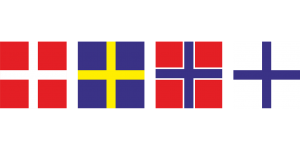
Let’s list all the countries that belong to the Nordic culture:
- Denmark
- Norway
- Sweden
- Finland (often forgotten)
- Iceland
Below you can find a table with the scores of the Nordic culture:
| Hierarchy | Loyalty | Goal Orientation | Predictability | |
| Denmark | 21 | 76 | 19 | 25 |
| Norway | 33 | 71 | 11 | 47 |
| Sweden | 33 | 74 | 7 | 26 |
| Finland | 35 | 68 | 25 | 49 |
| Iceland | 35 | 65 | 15 | 45 |
For more info on each of these primary cultural dimensions, click here.
As you can see, there are some differences within the Nordic culture, but it is minimal.
Doing Business With the Nordic Culture
When it comes to doing business with the Scandinavian culture as a non-Scandinavian, the pitfalls are generally the same.
Hierarchy is relatively low in Scandinavian countries. This means that the boss doesn’t act in a very hierarchical fashion, but is more seen as a colleague with a different function: there is a relatively high degree of delegation in the organization.
Loyalty: All Nordic countries are individualistic. This means that their loyalty lies with themselves, rather than with the group they belong to. For non-Scandinavians, this is often confusing because they see these countries as very social, in which people take care of each other in society. But this is because of their low score on Goal-orientation.
Goal-orientation: This is a common trademark of all Scandinavian countries: they are more process-oriented than goal-oriented. This means that there is a lot of consensus-seeking amongst the stakeholders. Decisions are often meant to take matters in a certain direction, and many times are not even final.
Predictability is the dimension that differs most between these countries. Sweden and Denmark score the lowest. But only when you’re from any of the Nordic countries will you notice these differences.
Nordic Culture and the Forgotten Countries
It may sound obvious to group only the Nordic culture or Scandinavian cultures as clusters. But some countries also follow the same cultural profile as the Nordics do. Namely, the Baltic states and the Netherlands.
The Baltic states are “too young” to formally add them to the Scandinavian culture, but I think it is likely that they will follow the same cultural pattern.
With certainty, I can say that the Netherlands very closely follows the Nordic culture profile. See the updated table below with the numbers for the Dutch added.
| Hierarchy | Loyalty | Goal Orientation | Predictability | |
| Denmark | 21 | 76 | 19 | 25 |
| Norway | 33 | 71 | 11 | 47 |
| Sweden | 33 | 74 | 7 | 26 |
| Finland | 35 | 68 | 25 | 49 |
| Iceland | 35 | 65 | 15 | 45 |
| the Netherlands | 34 | 81 | 17 | 50 |
Swedish Culture

When it comes to Swedish culture, they stand out with their low score on the third dimension: goal orientation. This makes them the strongest consensus-seeking nation in the world.
Swedish culture also seems to be the “biggest” at pretty much everything: land mass, inhabitants, and GDP. For a clear overview of the differences, click here.
The Swedish consensus-seeking culture, which results in a long decision-making process and may lead to decisions that are not permanent, does not mean a lack of success.
Sweden has produced several very successful organizations. Think of Ikea, Volvo, and Spotify (Nokia is a Finnish company).
If you want to read more about a specific case study involving Nordic countries, click here.
An article about the differences between American and Dutch culture can be found here.
Nordic Culture on Culture Matters.
Any comments? Leave them below.
Would you like to know more about doing business with the Nordic culture (or Dutch culture)? Get in touch with me now.
Get a Taste of How Chris Presents, Watch his TEDx Talk
 Call Direct: +32476524957
 Call Direct: +32476524957
European Office (Paris) Whatsapp: +32476524957
 European Office (Paris) Whatsapp: +32476524957
The Americas (USA; Atlanta, GA; también en Español): +1 678 301 8369
Book a 20-minute strategy call
If you want more details, fill in the form below
No obligation. Chris will personally respond to discuss your event, audience, and objectives.

His education is in Organisational Psychology and he has lived in the USA, the Netherlands, and currently lives in Belgium.
Chris Smit
- 204 Cultural Differences and Architecture with Kevin Kenon - 29 September 2026
- 203 Cultural Differences and Corporate Coaching with Nic Woodthorpe-Wright - 15 September 2026
- 202 Leadership and Culture with Diane Demetre - 1 September 2026
Hello! Thank you for the interesting article but as a Finn it was kind of sad to remark that Nokia was stated to be the pride of the Swedes. Despite the fact that Sweden has indeed produced many successful companies, Nokia is not one of them. Thus, the sentence” think of Nokia, Ikea, Volvo, and Spotify” is not entirely correct as in fact Nokia is a Finnish company.
Hi Sofia…
Thank you so much for correcting me… That was quite stupid of me.
I’ve taken Nokia out of the Swedish country and added it separately as a Finnish country.