Culture in Cuba
He turned 80 recently.
And however much an icon he is for Cubans, he is also mortal, meaning Fidel Castro will not live forever.
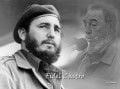
An article about Culture in Cuba.
Being the longest reigning ‘benevolent’ dictator (since 1959) in the world, being in the news off and on whenever there was (another) quarrel with its neighbor the USA, the question arises, “Will life change for the Cubans after Fidel?“
From a Cultural perspective: No.
Here´s why:
First of all, Cuba is a country with a steep hierarchical society (high Hierarchy). This means that centralized power and institutions probably are there to stay. Since 1925 Fidel Castro has already been the third dictator of Cuba. Their total period of reign covers 61 years! This means in a period of 100 years (1906 – 2006) only 39 years Cuba wasn’t controlled by dictators. For more than 10 years (1933 -1944) Cuba had several “puppet presidents” behind which the strong real power holders stood. And all the elected presidents had short periods of reign. There was in most cases some kind of ‘scandal’ that led to their fall. In other words, society is controlled by a few people, high up in the existing power pyramid or they gain and establish central power for a long period through uprise, “coups d’etat“, revolution, etc.
Second, Cuba has a collectivistic society (low score on Individualism). This means that there are so-called in-groups and (implicitly) out-groups. The current rulers (Fidel is not alone, he has a family, typically a brother who most likely will succeed him) are such an in-group. Not necessarily limited to the Castro family, more so like a circle around the power holders. If you do not belong to that circle, you belong to the out-group. Plus, every in-group has certain (unwritten) rules that the group members should follow in exchange for a powerful position, protection, and a comfortable life.
Third, there is open questioning of how one can change the current socio-political situation in Cuba. In other words, people are uncertain if any changes will/can succeed. They are somewhat fatalistic. This is the link to the third cultural dimension: Uncertainty avoidance. The internal need for structure, rules, and stability.
Change of power outside the existing in-group will only take place through revolution. And the new power holders would come from the ranks of present Cubans living in the USA, they would establish again a centrally controlled power system.
So, No, Cuba will not change as a society where power is centralized, and where there are a few “haves” and many “have-nots“.
Culture in Cuba on Culture Matters
Get a Taste of How Chris Presents, Watch his TEDx Talk
 Call Direct: +32476524957
 Call Direct: +32476524957
European Office (Paris) Whatsapp: +32476524957
 European Office (Paris) Whatsapp: +32476524957
The Americas (USA; Atlanta, GA; también en Español): +1 678 301 8369
Book a 20-minute strategy call
If you want more details, fill in the form below
No obligation. Chris will personally respond to discuss your event, audience, and objectives.

His education is in Organisational Psychology and he has lived in the USA, the Netherlands, and currently lives in Belgium.
Chris Smit
- 204 Cultural Differences and Architecture with Kevin Kenon - 29 September 2026
- 203 Cultural Differences and Corporate Coaching with Nic Woodthorpe-Wright - 15 September 2026
- 202 Leadership and Culture with Diane Demetre - 1 September 2026