
Travel and culture. Do They Go Hand in Hand?
[4-min read]
The obvious answer would be yes. Or rather, it should be yes.
Watch (part of) this 5 min. video. It’s a bit stereotypical, but at the core, it’s correct:
This Came Out of a Management Survey of One of the Biggest Tour Operators in Europe:
One of the biggest European tour operators asked their first and second-line management what skills they needed to perform their (international) work better. Much to the surprise of HR, this came out on top:
“Understand different cultures better…”
Much to the surprise of HR, who’d expected that “negotiations,” “presenting,” or “bad news conversations” would come up.
If you travel, you get to see, hear, feel, and overall experience the different cultures you’re visiting. Right? Over the last 20+ years, I’ve been a professional interculturalist and have traveled extensively across the globe. I’ve met many people who have traveled but didn’t have a clue about cultural differences.
So yes, travel and culture go hand in hand, but travel is not equivalent to cultural awareness or cultural competence.
We’re traveling more and more, but often don’t go outside our comfort zone to experience a different culture. When we see something we don’t understand from another culture, we often make up our own minds about what we see, rather than asking what is going on. Asking what is going on would enrich our experience and ourselves.
This is the perspective of a tourist. Next to that, there is also a perspective of the people who work in the travel industry. Also, their travel and culture play a role.
Welcome (Cultural Awareness)
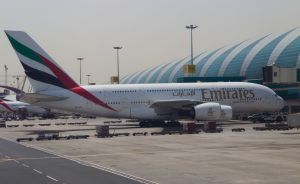
Big travel organizations often rely on local people to run their holiday destinations. But it’s not only local people running the place. Often, holiday locations are managed by non-local people. In other words, people from different cultures need to work with people from different cultures.
In addition, the management layer that is above sits in a remote office, and people from those management teams often travel to those holiday destinations. Also, their cultural differences play a role.
Imagine this Scenario:
A German manager from a travel organization visits one of their holiday destinations in Asia. Locally in Asia, a Brit runs that local office where the majority of the people working there are Asian. During this visit, the local people and the British local manager are welcoming Dutch tourist going on holiday.
Interesting cultural mix, don’t you think?
What is Your Frame of Reference?
If travel and culture do not go hand in hand with cultural awareness, does having traveled count for nothing then?
No, that’s not true.
Travel without formally understanding cultural differences mainly adds to developing a frame of reference; whenever you travel, you build your frame of reference. You do get to see new things and experience them. And even if you don’t understand what you see and experience, you still build your frame of reference. “Stuff is different here than it is back home…“
When people who have traveled go for cultural awareness training, they pick up the theory than young students who have not traveled as much yet.
Travel and Culture: How Can You Benefit From Cultural Awareness?
There are two groups to consider:
- Tourists
- People working in the travel industry
Tourists
As a tourist, you can benefit from cultural awareness to have a richer experience of your holiday. Everything will make more sense to you. You will be less judgmental when you see things you don’t understand (because that is what people do; we judge). You will come home a bigger person than you were before. And no one can take that away from you.
Travel Industry
If you work in the travel industry, I hope that it is obvious how you can benefit from a better understanding of cultural differences. Travel and culture should go hand in hand. In the end, you (as an organization) will save time and money by becoming culturally aware. As a person, you will understand your colleagues from other cultures better. You will be less frustrated with them, and they will be less frustrated with you. People will also stay in their jobs longer as they enjoy their work more.
Which in turn will be good for the organization.
What Next Steps to Take?
The obvious next step to take is to get in touch with me to discuss how you and your organization could benefit from a better cultural understanding. You can do so here.
You can also check out this page, which talks about the different forms of intervention there are to further your cultural knowledge.
Reading up about different cultures is also an option. If you go here, you’ll find a list of books that can help you further. There you’ll also find two of my own books.
A real-world case study covering the Travel Industry can be found here.
Hope this helps…
Travel and Culture on Culture Matters.
Any comments are welcome, of course. Just leave them below.
Read more about doing business in an intercultural environment.
The cultural divide between Boeing and Airbus. Read the article here.
Get a Taste of How Chris Presents, Watch his TEDx Talk
 Call Direct: +32476524957
 Call Direct: +32476524957
European Office (Paris) Whatsapp: +32476524957
 European Office (Paris) Whatsapp: +32476524957
The Americas (USA; Atlanta, GA; también en Español): +1 678 301 8369
Book a 20-minute strategy call
If you want more details, fill in the form below
No obligation. Chris will personally respond to discuss your event, audience, and objectives.

His education is in Organisational Psychology and he has lived in the USA, the Netherlands, and currently lives in Belgium.
Chris Smit
- 205 Cultural Differences and the Levant with Dr. Hussein Rifai - 13 October 2026
- 204 Cultural Differences and Architecture with Kevin Kenon - 29 September 2026
- 203 Cultural Differences and Corporate Coaching with Nic Woodthorpe-Wright - 15 September 2026