The US elections from a Cultural perspective

US elections

2012 Elections

It’s election year in the US. The first primaries have been held in Iowa for the bid of the republican candidate who will contest President Obama in November this year. The winner there: Mitt Romney. For now.

Another Republican contestant, Newt Gingrich, who was in the lead before, declared the elections to turn “ugly”. What else is new? Read More

BUSH in BEJING Political Rhetoric and Cultural Muscle-Flexing

Olympic rings

Along the way to Beijing to attend the Olympic Games Opening Ceremony this past week, President Bush made a stop in Bangkok.

His purpose was to commemorate the 175th anniversary of the alliance between Thailand (Siam when the alliance was formed) and the United States.

In his Bangkok address, Bush paid allegiance to Thailand as a significant leader in Asia and applauded the Thai government for the restoration of democracy for its citizens as well as being one of the driving forces that has helped to transform post-WWII Asia into a thriving and dynamic region.

Read More

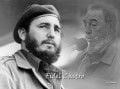
Why life after Fidel Castro will not change in Cuba

Fidel Castro

He turned 80 recently. And however much an icon he is for Cubans, he is also mortal, meaning Fidel Castro will not live forever.

Being the longest reigning ‘benovalent’ dictator (since 1959) in the world, being in the news off and on whenever there was (another) quarrel with its neighbour the USA, the question arises, “Will life change for the Cubans after Fidel?”

From a Cultural perspective: No.
Here“s why:
First of all Cuba is a country with a steep hierarchical society (high Powerdistance). This means that centralised power and institutions probably are there to stay. Since 1925 Fidel Castro is already the third dictator of Cuba. Their total period of reign covers 61 years! This means in a period of 100 years (1906 – 2006) only 39 years Cuba wasn’t controlled by dictators. Of which more than 10 years (1933 -1944) Cuba had a number of “puppet presidents” behind which the strong real power holders stood. And all the elected presidents had short periods of reign. There was in most cases some kind of ‘scandal’ that led to their fall. In other words society is controlled by a few people, high up in the existing power pyramid or they gain and establish central power for a long period through up rise, “coups d’etat”, revolution, etc.

Read More

Get Adobe Flash player